Water bodies as a heat source: ifeu sees great potential in aquathermal energy
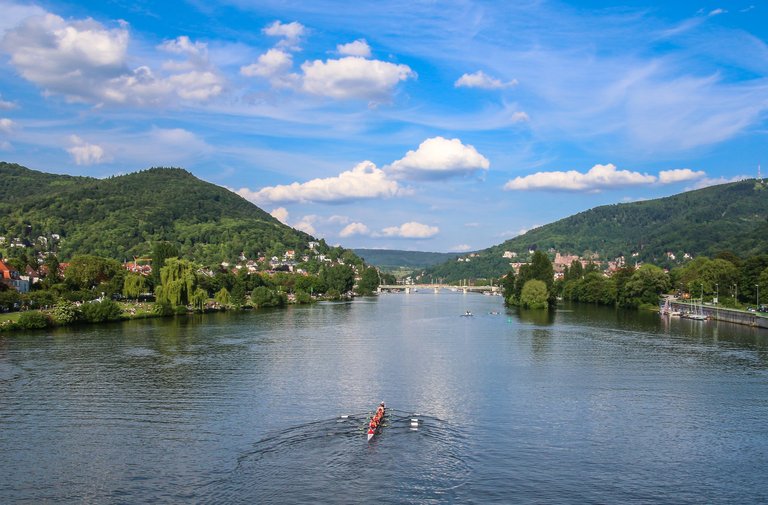
On behalf of the Ministry for the Environment, Climate and Energy, ifeu has investigated the significance of water-source heat pumps for the heating transition in Baden-Württemberg. The findings show that water-source heat pumps can play a significant role, particularly in conjunction with district heating networks, which enable a large number of buildings to switch to a renewable heat supply centrally and all at once. Solar radiation, precipitation and groundwater inflows help rivers and lakes to continuously absorb and store heat. Water-source heat pumps make use of this. A positive side effect is that extracting heat in this way can help, at a local level, to counteract the increasing warming of water bodies.
The ifeu report analysed the heating plans currently in place across the state, which were drawn up as part of local authority heating planning – 245 heating plans have already been finalised, and over 200 more are in the process of being drawn up. The share of aquathermal energy in the energy demand of heating networks envisaged in the heating plans to date amounts to just 8 per cent. By contrast, a significantly greater role is attributed to other sources such as hydrogen (10 per cent) and biomass and waste incineration (24 per cent), although significant competition for land use is to be expected in these areas. “Although the potential of aquathermal energy is regularly examined in heating planning, this energy source has not yet received sufficient attention as an alternative to less reliable energy sources, particularly given its very high thermal potential,” said Dr Martin Pehnt, Managing Director of ifeu and a member of the Baden-Württemberg Climate Expert Council.
In future, the potential of aquathermal energy is to be included in the Energy Atlas published by the Baden-Württemberg State Agency for the Environment (LUBW). This will provide local authorities and planners with an additional basis for taking water-borne heat into account in municipal heating planning and the development of heating networks.
Contact
Helena Stange
[email protected]
+49 (0)30 2844578 28
To profile
Prof. Dr. Martin Pehnt
[email protected]
+49 (0)6221 4767 0
To profile