Innovative community-based heat supply – IGWarm
What opportunities do community heating networks offer for an alternative, neighbourhood-based heat supply – and under what conditions can they be successfully implemented?
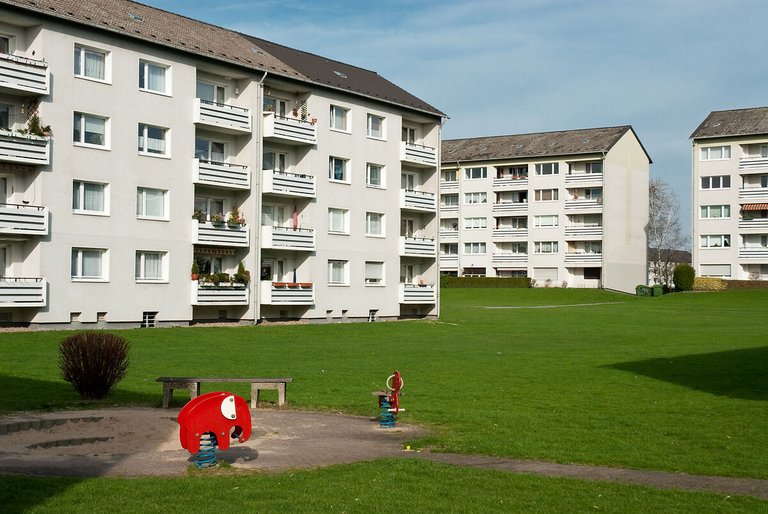
Grid-based heat supply is an effective way of integrating renewable heat sources. Consequently, heating network concepts are attracting widespread interest. In many places, local authority heat planning identifies areas suitable for development through heating networks. However, implementation is often challenging – particularly where traditional commercial operators are absent or do not see an economic basis for a project. Local authorities, too, often have only limited capacity and infrastructure to establish a district heating network. Here, community-organised groups such as residents or local initiatives can become a driving force and realise a community-based heat supply.
The IGWarm research project is supporting five innovative heating projects in Brandenburg, Bremen, Bavaria and Baden-Württemberg. Most are organised as co-operatives. Initial research findings show that this legal form is particularly well suited to the collective organisation of financing, the legal framework and the day-to-day operation of heating networks. Practical examples include the bioenergy villages of Schlöben and Pfalzgrafenweiler, as well as the ErdwärmeDich initiative in Bremen and kliQ in Berlin.
IGWarm is investigating the conditions under which community heating networks can be implemented as an innovative, alternative and neighbourhood-based heating supply. The focus is particularly on areas where traditional local or district heating networks are not economically viable due to the customer base. What potential for a network-based heating supply can be tapped in these areas? What obstacles exist? And how can the framework conditions be improved? To answer these questions, the project team is working closely with practitioners in the field. The findings will be compiled into practical guidelines for existing and newly established heating communities.
Runtime
April 2026 – March 2028
Funding
Bundesministerium für Forschung, Technologie und Raumfahrt (BMFTR), Berlin
Partner
iöw Institut für ökologische Wirtschaftsforschung gGmbH
Contact
Sebastian Blömer
[email protected]
+49 (0)6221 4767 28
To profile
Yanik Acker
[email protected]
+49 (0)6221 4767 108
To profile