

Multilingual GHG emission calculator for inventories and measures in the transport sector to support cities and countries published
ifeu has developed the MobiliseYourCity Emissions Calculator on behalf of the MobiliseYourCity Initiative to help cities and countries assess the GHG impact of their SUMPs (Sustainable Urban Mobility Plan) and NUMPs (National Urban Mobility Policies and Investment Programmes).

New Policy Paper shows the economic viability of the overhead line technology and its potentials for saving CO2
Road freight traffic is responsible for more than one third of the national greenhouse gas emissions in the transport sector - and is likely to increase in the future. Climate-neutral freight transport must play a key role for Germany to achieve its climate goals. A new joint Policy Brief by Fraunhofer ISI, the Oeko Institut and ifeu shows that the overhead line technology has great potential for CO2 savings and can be economically viable.
New publication on life cycle assessment (LCA) guidelines for CCU technologies
After two years of work, a panel of experts convened by the EU Commission's Directorate-General for Energy published guidelines for life cycle assessment of CCU technologies, i.e. technologies for carbon capture and utilisation. ifeu expert Nils Rettenmaier is one of the authors.
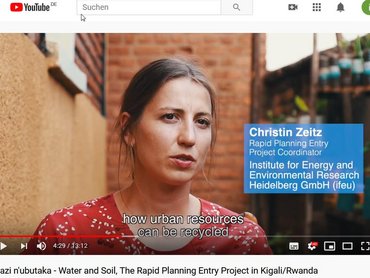
Amazi n’ubutaka – Water and Soil: ifeu expert in the Rapid Planning Project Film
The short film Amazi n’ubutaka – Water and Soil documents the work of ifeu scientist Christin Zeitz on the Rapid Planning Entry Project in Kigali/Rwanda. Watch the film now online at YouTube.
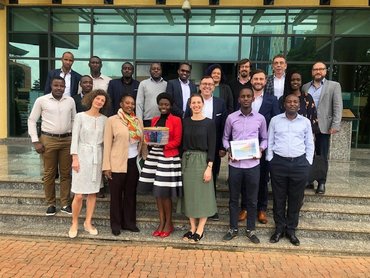
Final conference of the project Rapid Planning in Kigali/Rwanda
In the multi-year research Rapid Planning project, ifeu scientists Bernd Franke and Christin Zeitz coordinated the scientific activities of 11 German research partners, UN Habitat Nairobi and many Rwandan partners.

Web-App with climate friendly dishes
As part of the KEEKS project, a web app with 50 recipes was developed that is primarily aimed at school kitchens. ifeu has determined the environmental impact of all recipes. In addition to greenhouse gas emissions, the land, phosphate and water footprints of the recipes are also indicated.
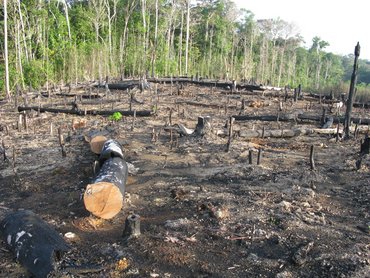
Sustainable Consumption for Biodiversity and Ecosystem Services
In Germany today, we consume more goods and services than ever before. To date, there are only a few quantifying assessments of the effects of the associated material flows on the environment outside Germany. Above all, the consequences for biodiversity and ecosystem services are usually ignored. The "Konsumwende" project commissioned by the Federal Agency for Nature Conservation (BfN) aims to close this gap.
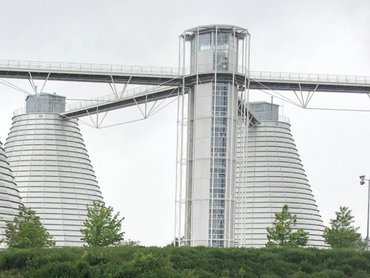
Emission of nitrous oxide (N2O) from sewage sludge incineration plants
The mono-incineration of sewage sludge in a fluidized bed furnace is the technology of choice to implement the phosphorus recycling obligation specified in the Germany’s Sewage Sludge Ordinance 2017. During combustion, significant amounts of the greenhouse gas nitrous oxide are released due to the low temperatures in the furnace. If Germany's entire sewage sludge were completely incinerated, this could result in up to 800,000 tonnes of CO2 equivalent being emitted per year. ifeu is currently investigating possible reduction measures in several projects.

Too valuable to be thrown away: biogenic waste has high energetic potential
What potential of biogenic waste and residues is available to the energy system, and for what purpose should it be used? These questions were the focus of the UBA BioRest project carried out jointly with IZES and the Öko-Institut.