Impacts of Storage Technologies and Hydrogen Value Chains
and their respective requirements, on nature conservation issues
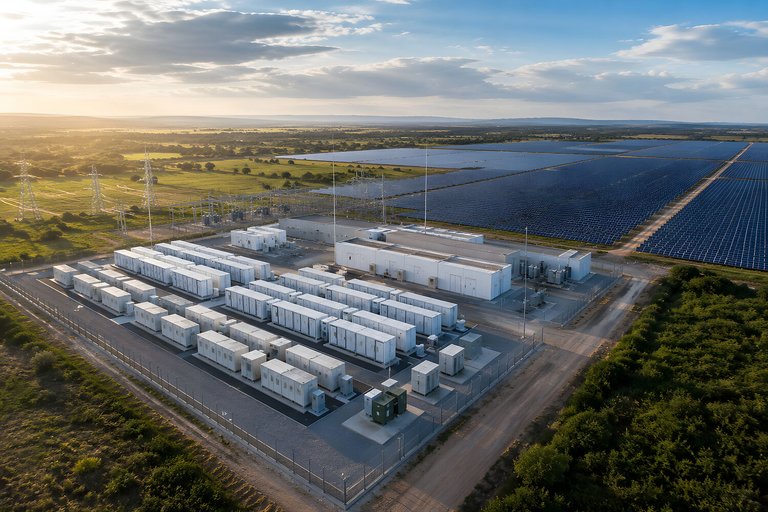
The project aims to enable an assessment of the impacts of new storage technologies and the expansion of the storage sector as a whole on nature and the landscape. To this end, gaps in knowledge are to be identified and, where possible, addressed.
The project is divided into six work packages. These begin with a review of the current state of the art and of research and development in storage technologies. As part of this, profiles of storage technologies will be drawn up, the relevance of which is derived from the literature meta-analysis.
In a meta-analysis of future requirements for renewable energy electricity storage technologies, scenarios will be developed based on existing studies. This analysis will be supplemented by interviews with experts and information from the project-accompanying working group (PAG).
Finally, the study also examines the political strategies, regulatory frameworks and support measures for the expansion of storage technologies. To this end, it systematically analyses which technologies are supported by which strategies or regulations, and to what extent. To address the question of what difficulties and barriers exist to implementation, interviews are conducted with relevant practitioners.
The assessment of the impact on nature and the landscape focuses, on the one hand, on the various storage technologies individually (risks associated with construction, plant and operation) and, on the other hand, on the overall impact based on scenarios for possible future expansion pathways. The scenarios also take into account the expansion of hydrogen production and the associated renewable electricity generation. The assessment criteria for evaluating conflicts of interest with nature conservation are derived from and applied using nature conservation assessment methods (including existing procedures such as the Habitats Directive impact assessment, species protection assessments and impact mitigation regulations) as well as system-based assessment tools (biodiversity in life cycle assessments). As a result, the cornerstones of an environmentally compatible expansion are developed.
When it comes to hydrogen, the issue of import requirements plays a key role. Based on a review of the literature, the scale of the imports under discussion will be estimated, and environmental sustainability criteria for hydrogen imports and their implementation will be developed.
The results of the work described will be compiled into a paper setting out policy recommendations, which will also include recommendations on key research areas and the way forward.
Runtime
December 2023 – October 2025
Client
Bundesamt für Naturschutz
Partner
LBST - Ludwig Bölkow Systemtechnik GmbH
Contact
Viviann Bolte
[email protected]
+49 (0)6221 4767 124
To profile
Dr. Theresa Schlamp
[email protected]
+49 (0)6221 4767 113
To profile
Nabil Abdalla
[email protected]
+49 (0)6221 4767 661
To profile