

ifeu is developing a unique LCA reference database for Germany
The Federal Environment Agency has commissioned a consortium led by ifeu to carry out a comprehensive review and technical enhancement of the ProBas database. The aim is to establish a unique, freely accessible, quality-assured LCA reference database for Germany. It is intended to provide companies, public authorities, research institutions and sustainability experts with a reliable data basis for environmental and climate assessments in future.
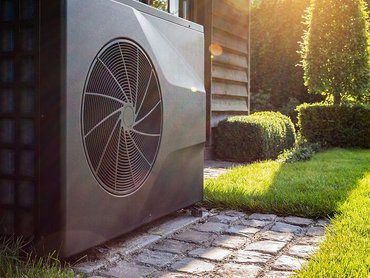
High Satisfaction with Heat Pumps – Experiences Exceed Expectations
A recent survey by ifeu, the Öko-Institut, and co2online shows that homeowners’ experiences with heat pumps are overwhelmingly positive. Ninety-five percent of respondents are satisfied or very satisfied. At the same time, high perceived costs, uncertainty regarding subsidies, and widespread misconceptions are still holding many homeowners back.
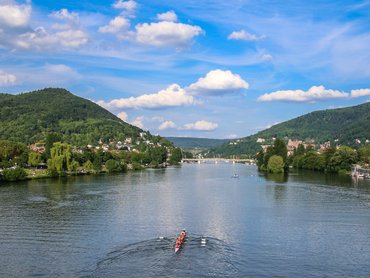
Water bodies as a heat source: ifeu sees great potential in aquathermal energy
On behalf of the Ministry for the Environment, Climate and Energy, ifeu has investigated the significance of water-source heat pumps for the heating transition in Baden-Württemberg. The findings show that water-source heat pumps can play a significant role, particularly in conjunction with district heating networks, which enable a large number of buildings to switch to a renewable heat supply centrally and all at once. Solar radiation, precipitation and groundwater inflows help rivers and lakes to continuously absorb and store heat. Water-source heat pumps make use of this. A positive side effect is that extracting heat in this way can help, at a local level, to counteract the increasing warming of water bodies.

New Study on E-Fuels and Hydrogen: How the Industry Must Achieve Its Own Climate Goals
Renewable fuels derived from hydrogen and hydrocarbons (PtGLS: Power-to-Gas, -Liquid, -Solid) are considered key building blocks of a climate-neutral energy supply, especially for sectors that are difficult to electrify, such as international shipping, aviation, and the chemical industry. Sufficient quantities of additional renewable electricity are crucial for their production. A new study commissioned by the Federal Environment Agency now shows the environmental impacts arising along various production and transport chains of electricity-based renewable energy sources and identifies the measures needed to significantly reduce emissions. As part of the NEET project (2023–2025), researchers from ifeu and Germanwatch analyzed the production, transportation, and conversion of electricity-based renewable energy sources. Based on this analysis, they were able to identify the key emission hotspots along the value chains and develop targeted mitigation measures. Following the refinement of the processes, the researchers recalculated and compared the environmental impacts for hydrogen and its derivatives. The results show that greenhouse gas emissions can be reduced by up to 90 percent compared to fossil-fuel-based reference products through optimized processes. Nevertheless, even under optimal conditions, residual emissions of about 10 to 20 percent remain. These emissions arise in particular during the manufacture of photovoltaic systems, wind turbines, electrolysers, reactors, transportation equipment, and other infrastructure.
Strategies for the decarbonisation of district heating in Germany: research project completed
The research project „Wärmewende: Strategien für den Einsatz klimaneutraler Fernwärmetechnologien“ (engl: “Heat Transition: Strategies for the Deployment of Climate-Neutral District Heating Technologies”), funded by the BMWE, has been investigating since 2023 how selected technologies can be specifically supported to accelerate the heat transition. The project was carried out by a consortium led by HIC Consulting; the Federal Office for Energy Efficiency (BfEE) provided oversight. The final report, which has now been published, provides concrete answers regarding the use of large-scale heat pumps, unavoidable waste heat, solar thermal energy and large-scale heat storage systems. As part of the project, key barriers were systematically identified and, for each specific technology, concrete solutions and practical recommendations for action were set out to accelerate market uptake.
New Study: More Efficient and Environmentally Beneficial Use of Biomass Based on the National Biomass Strategy
The National Bioeconomy Strategy (NBÖS) was adopted in 2020. It aims to facilitate the transition to a post-fossil fuel economic system across all economic sectors through products, processes, and services produced from biogenic sources. It is also intended to feed a growing global population, stimulate innovation and growth, and in doing so create income opportunities in rural regions of industrialized nations as well as in countries of the Global South. However, the bioeconomy does not, in and of itself, lead to improved sustainability or even to compliance with planetary boundaries. Rather, an expansion of biomass use carries the risk of significant ecological conflicts. An increase in production in agriculture, forestry, fisheries, and aquaculture leads to conflicting objectives with nearly all planetary boundaries. Even though biomass is considered a renewable raw material, its production is limited by the available land area. As the range of potential uses increases, so does competition for land use. The NBÖS therefore also calls for biomass to be prioritized—based on sound scientific evidence—for uses that are as efficient and ecologically beneficial as possible. These are precisely the issues addressed in the recently published study by ifeu and the Öko-Institut, commissioned by the Federal Environment Agency.
Biomass for energy and materials in the EU: Guidance for allocation in a biomass constrained world
As biomass demand is projected to rise to replace fossil resources, sustainable biomass supply is foreseen to face increasing constraints, while a comprehensive overview of future biomass demand and supply in the EU is lacking. Given biomass potential in contributing to Europe’s climate neutrality by 2050, Agora sought to optimise the production and use of biomass for energy and materials in the EU over time. Agora developed scenarios for biomass demand and supply in a climate neutral EU, whilst promoting competitiveness and strategic autonomy. In this context, Agora Energiewende commissioned Ifeu to assess the viability and practicality of a merit-order for biomass utilisation and provide higher granularity of some biomass flows to refine Agora’s approach on biomass for energy and materials. The present study is thus based on Agora’s main studies Agriculture, forestry and food in a climate neutral EU. The land use sectors as part of a sustainable food system and bioeconomy (Agora Agriculture, 2024) and Breaking free from fossil gas - A new path to a climate-neutral Europe (Agora Energiewende, 2023).
PRESS RELEASE: The Federal Ministry of Research's FONA Strategy: On the Right Track, but Innovation Must Be Considered More Broadly
Yesterday in Berlin, Federal Minister of Research Dorothee Bär presented her ministry’s new funding strategy, “Research for Sustainability" (Orig. „Forschung für Nachhaltigkeit (FONA)“. The Ecological Research Network (Ecornet)—a network of eight leading sustainability research institutes in Germany—welcomes the high priority that the minister herself and the Federal Ministry of Research, Technology, and Space (BMFTR) place on research into sustainability and economic transformation, as well as the ministry’s intention to increasingly fund interdisciplinary and transdisciplinary research addressing major societal challenges. To implement the strategy, the institutes propose a broader understanding of innovation, impact, and knowledge transfer, and recommend paying even greater attention to the social dimension of sustainability.

Dossier: Sustainable Neighbourhood Development – Balancing Climate Protection, Climate Adaptation and Future-Proofing
Sustainable neighbourhood development offers an integrated approach to combining and practically implementing climate protection, climate adaptation and future viability. Neighbourhoods are key levels of action at which environmental, economic and social measures can be effectively bundled and tailored to local conditions. On behalf of the ‘Gebäudeforum klimaneutral’ (Climate-Neutral Buildings Forum) of the German Energy Agency (dena), ifeu has produced a dossier on sustainable neighbourhood development. The dossier first sets out the social, political and legal framework and then presents exemplary measures relating to the dimensions of climate protection, climate adaptation and future viability. The focus is on analysing the synergies and conflicting objectives that may arise during practical implementation at neighbourhood level. The dossier offers strategic guidance for local authorities, planners and decision-makers who wish to design sustainable neighbourhoods as resilient, climate-conscious and socially balanced living environments.