

LNG: Germany must insist on clean production
For the liquefied natural gas (LNG) that will be imported to Germany from all over the world in the future, the upstream chain - i.e. extraction, processing, liquefaction and transport - is associated with considerable environmental impacts. Compared with the subsequent combustion in power plants and heating systems, up to 50 percent additional climate emissions are generated there. One reason for this is harmful methane emissions, which have so far been insufficiently taken into account. This is now shown by an ifeu study commissioned by the Climate Protection Science Platform.

The LT ready concept describes low-temperature capability readiness of buildings and municipalities - for German and European building policy
Germany is debating the best way to supply heat. In countries such as France, Belgium, Denmark, Austria and Norway, the phasing out of new oil and gas heating systems is also on the political agenda. An ifeu study in cooperation with RAP examines how the concept of low-temperature heating systems can make it easier for municipalities to switch to clean and renewable local heating. In this way, they can set a course towards climate neutrality without overburdening citizens.
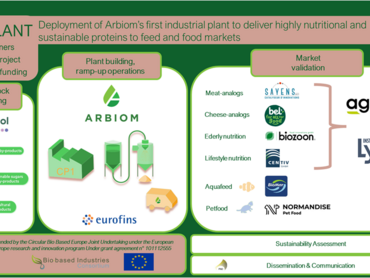
Kick-Off of SYLPLANT-Project
The kick-off of the EU project SYLPLANT was announced yesterday - SYLPLANT is a collaborative project of 17 partners led by Arbiom which aims to deploy Arbiom’s sustainable and highly nutritional protein ingredients into feed and food markets. ifeu contributes a comprehensive sustainability assessment including LCA to the project. It received a €14 million Grant from the Circular Bio-based Europe Joint Undertaking (CBE-JU) under the Grant Agreement 101112555.

`Bio' = Progress? How sustainable is the German bioeconomy?
A bio-based economy that is oriented towards natural cycles, sustainable and climate-neutral - that is the goal of the German government's bioeconomy strategy. But is the bioeconomy developing in the desired direction in all areas? The use of biomass can lead to conflicting goals that are not always visible at first glance because they occur globally or with a time lag.
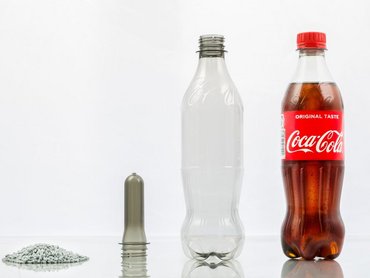
Consistent recycling of PET bottles can save 60,000 tonnes of CO2
If all the plastic from the non-refillable PET deposit bottles put on the market in Germany were reused to make such bottles, about 60,000 tonnes of CO2 could be saved. Instead, too much of the food-grade recycled plastic from the return of the one-way deposit goes to alternative uses and then quickly to incineration. This is the result of a study by ifeu and the GVM Gesellschaft für Verpackungsmarktforschung.

Study on sufficiency approaches in the building sector published: stronger anchoring of sufficiency recommended
In order to meet climate and sustainability targets in the building sector, sufficiency needs to be anchored more strongly and in a complementary way as a third sustainability strategy alongside efficiency and consistency. In this project, a basic definition of the term is presented, approaches are identified, energy and greenhouse gas savings are quantified, and proposals for political and legal anchoring are developed.

SWM-GHG Calculator (2023) is updated
The Waste Management Climate Calculator, first published in 2009 to help developing and emerging countries better understand the GHG impacts of waste management, has now been updated to include more treatment options. Developing and emerging countries may improve their greenhouse gas (GHG) balance significantly by establishing integrated solid waste management systems.

Climate-neutral district heating: Many paths to the coal phase-out
There is no "one-size-fits-all" solution for the conversion of the district heating supply in the municipalities. Whether heat from river water, large-scale solar thermal energy, industrial waste heat, waste incineration or heat sources in the ground: A new study for the Federal Environment Agency shows what options utilities have when saying goodbye to gas and coal and what the federal government must do to accelerate the conversion.
Too valuable for car and heating
The bioeconomy can be a central building block for the transformation of our largely coal, oil and gas-based economy. However, renewable raw materials and synthetic carbon compounds are scarce and expensive. They should be used in areas such as the chemical industry – and not as an energy source. For the transition from the fossil economy to the bioeconomy to succeed, fossil carbon must also become more expensive. ifeu now presents the results of four landmark studies.