

Change of managing director at ifeu
On 1 March 2026, Andreas Detzel will hand over his position as Commercial Director to Andreas Höger. The decision was made at his own request with the aim of reducing his working hours in order to have more time for personal interests. The change in management will take place as planned and with the involvement of the institute's employees. We would like to express our sincere thanks to Andreas Detzel for 11 years of valuable leadership and reliable cooperation, which have contributed significantly to the further development of ifeu. We are very pleased to be able to continue working with him as colleagues. At the same time, we are delighted to welcome Alexander Höger as the new commercial member of the management team.

Evaluation reports 2024 of the federal subsidy for efficient buildings (BEG)
With the ‘Federal Funding for Efficient Buildings’ (BEG), the federal government is promoting both the energy-efficient refurbishment efforts of building owners and the switch to heating with renewable energies. Since 2022, ifeu has had the annually recurring task of evaluating the BEG as an independent research institute. This is done together with its consortium partners Prognos AG, FIW and ITG and on behalf of the Federal Ministry of Economics and Climate Protection (BMWK). Within this framework, it will be examined whether the objectives pursued are actually being realised in practice and with what effect. The Ministry has now published the evaluation reports for the 2024 funding year.

Fuel consumption and CO2 emissions of plug-in hybrid vehicles in real-world driving conditions
Plug-in hybrid electric vehicles (PHEVs) can run on electricity or a combustion engine, but only offer climate benefits when running on electricity. Current evaluations of around one million PHEVs from 2021–2023 show that their actual fuel consumption and thus their real CO₂ emissions are on average three to five times higher than the officially stated values. Real fuel consumption averages 5.9 l/100 km, which is close to the average for combustion engines (approx. 7 l/100 km). The main reason for this is that PHEVs only cover about 25–30% of their kilometres electrically on average. The huge gap between official and actual fuel consumption massively weakens the effectiveness of European CO₂ regulations.
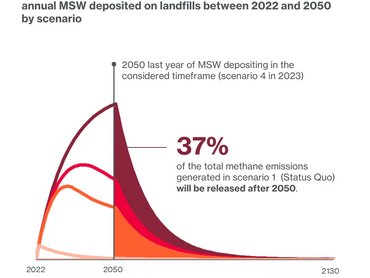
Methane emissions from Europe’s landfills: Scenarios and Data Challenges
Methane emissions from landfills represent a significant and often underestimated climate challenge. Methane is the second most important greenhouse gas after carbon dioxide, with a higher Global Warming Potential. Given methane’s short atmospheric lifetime and powerful near-term warming effect, rapid mitigation can deliver substantial climate benefits. Kanadevia Inova commissioned Prognos and ifeu to analyse the timeframe and magnitude of methane emissions from landfilling and highlight data gaps to support evidence-based policymaking and accelerate methane-reduction efforts.

Shaping climate change in a socially responsible manner
As part of the event series ‘Treffpunkt Transformation – Zukunftswissen im ifeu’ (Meeting Point Transformation – Future Knowledge at ifeu), Dr Brigitte Knopf, founder of the think tank ‘Zukunft KlimaSozial’ (Future Climate Social) in Berlin, spoke about the central importance of socially just climate policy. In her presentation, she made it clear that climate protection and social policy must be considered together from the outset – especially in the areas of housing, energy and mobility, which have a profound impact on people's lives.

Climate protection potential of the circular economy in Baden-Württemberg
A new study shows the relevance of material recycling for achieving climate targets by 2040. What contribution do waste management, the circular economy and, in particular, material recycling make to achieving the climate targets of the state of Baden-Württemberg? The research project ‘Climate protection potential of the circular economy in Baden-Württemberg’ provides the first systematic and comparative assessment of this issue.

Brochure: Shaping the heat transition – knowledge and ideas for local activists
‘Shaping the heating transition – knowledge and ideas for local activists’ is a new brochure from BUND and ifeu that helps citizens to gain a thorough understanding of the heating transition and actively shape it. It is aimed at committed individuals who want to promote climate-friendly, affordable and socially equitable heating – both in their own homes and at the local level.

Ready for a heat pump? Online tool gives homeowners an initial assessment
Is my house suitable for heating with a heat pump? The new ‘Heat Pump Building Check’ provides homeowners with a quick assessment. Using a simplified room-by-room heating load analysis, the online tool shows whether the building is ‘low-temperature-compatible’, i.e. which rooms can be heated sufficiently with a flow temperature of maximum 55 °C or where this can be achieved with minor measures. The ‘Heat Pump Building Check’ is a new, free online tool that is now available to homeowners to assess the technical suitability of existing buildings for the use of a heat pump. The application was developed on behalf of the Federal Environment Agency under the leadership of the ifeu Institute, together with the non-profit consulting company co2online and the engineering firm Heckmann.
Building Modernisation Act as an opportunity
Thinking about heat generation and efficiency together – for growth, jobs and acceptance: The announcement by the coalition committee that it will replace the current Building Energy Act with a ‘Building Modernisation Act’ next year offers, in the view of industry experts, an opportunity for a more integrated policy that addresses climate-neutral heat generation, efficient building technology and structural thermal insulation together.