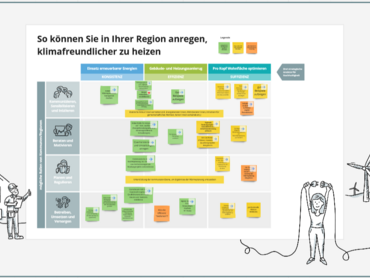
Publication of networking and information tools with a broad overview of regional climate protection activities in the areas of heat, mobility, food supply and consumption
What implementation options do municipalities and regions have to strengthen and structure climate protection? How can they think together the approaches of sufficiency, efficiency and consistency in order to consider climate protection holistically? In order to be able to answer these questions interactively as a network or individual region/municipality, ifeu has developed a freely accessible network tool in the Transform-R project.
16 tonnes of raw materials per capita: Resources Report for Germany published
Raw material consumption in Germany amounted to 16 tonnes per capita in 2019, 30 % above the global average. Climate emissions and raw material use are closely linked: extraction and initial processing of raw materials are responsible for 40 % of our greenhouse gas emissions. These and other figures are provided by the third Resources Report for Germany, published by the German Environment Agency and co-authored by ifeu. On thirty double pages, comprehensive data and analyses on the use of raw materials in Germany are presented and discussed. In a special chapter, scenarios for the use of raw materials in the future are highlighted.

Start of the Climate Awakening in Erlangen
With its decision on 27 October, the Erlangen city council has determined to make the "Roadmap Climate Awakening" as the basis for its further actions. The Roadmap was developed by ifeu together with all climate-relevant actors in Erlangen (representatives from citizens, business, administration and civil society) and contains 41 measures with which Erlangen can take a big step towards climate neutrality by 2030.

Industry 2030: More climate protection possible with renewable biofuels
By 2030, butanol as a "third-generation biofuel" can already achieve initial successes for climate protec-tion in industry. This is the result of a life cycle assessment (LCA) conducted by ifeu as part of a study on "Options for a Sustainable Energy System with Power-to-X Technologies". Read more about the Kopernikus-Project P2X.
Health Care Without Harm (HCWH) Europe and ifeu establish a partnership to develop greenhouse gas monitoring in the health sector
HCWH Europe’s mission is to transform healthcare worldwide so that it reduces its environmental footprint, becomes a community anchor for sustainability and a leader in the global movement for environmental health and justice.
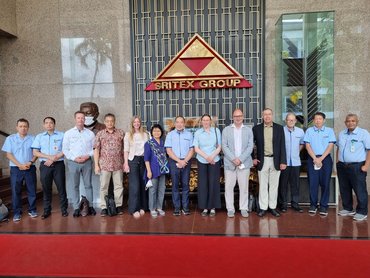
EnaTex – Kick-off for the BMBF-funded project in Jakarta
The EnaTex project aims to accompany the Indonesian textile industry on its way to sustainability and climate protection. The transformation process initially focuses on energy efficiency and renewable energies. At the kick-off in Jakarta on 24 May and the subsequent scientific symposium, the Indonesian ministries of energy, textiles and education as well as Indonesian companies showed great interest in the development of the European Green Deal. Consortium partner ifeu was represented by Dr Guido Reinhardt.
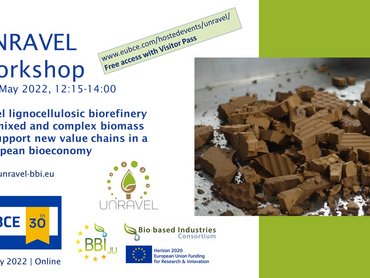
Sustainability impacts of a novel lignocellulosic biorefinery concept: Join the UNRAVEL Workshop at 30th European Biomass Conference and Exhibition EUBCE
ifeu conducted the integrated sustainability assessment in the EU project UNRAVEL on a novel lignocellulosic biorefinery concept.

First results of the greenhouse gas balances of hospitals
In the project Climate Protection in Hospitals by Optimising Supply Chains, ifeu is using the example of Heidelberg University Hospital to balance the greenhouse gas emissions of hospitals with a focus on emissions from supply chains ("Scope 3" emissions). An evaluation of data from France shows that "Scope 3" emissions account for about 75 percent of the total balance.

New environmentally friendly ingredients for cosmetics, personal care products and dietary supplements
The EU-funded project EnXylaScope with the participation of ifeu is researching new environmentally friendly ingredients for cosmetics, personal care products and dietary supplements made from woody and grassy residues. Half a year after project-start, first promising results were exchanged at a project meeting and further information about the project has been published.