
Climate protection in Baden-Württemberg - much shadow, little light
The Council of Climate Experts today presents its statement on the progress of climate protection in Baden-Württemberg, including an assessment of the state government's Climate Measures Register (KMR). The 0.4% reduction in greenhouse gas emissions achieved in 2022 compared to the previous year now represents a 21% reduction compared to 1990. The climate protection target anchored in the BW Climate Act for 2030 - a 65% reduction in greenhouse gas emissions relative to 1990 - thus requires a further reduction of 44 percentage points in the remaining seven years. This calls for completely new dimensions in emissions reduction, both in terms of the annual quantities required and the necessary momentum.
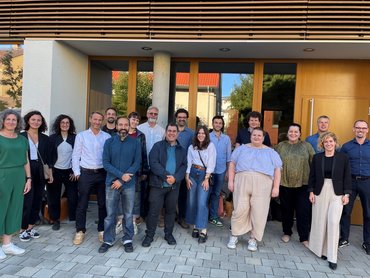
3rd General Assembly Meeting on Decarbonising Buildings in Europe
Last week, ifeu welcomed its "iBRoad2EPC" project partners to the 3rd General Assembly Meeting in Heidelberg. In the EU-funded project "iBRoad2EPC", ifeu and its partners are working together to improve the energy efficiency of buildings in Europe, specifically on the decarbonisation of the building stock within the EU.
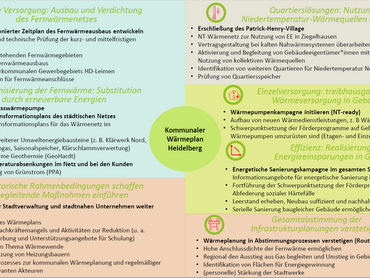
ifeu presents municipal heating plan for Heidelberg with partners
Around 37 percent of all carbon dioxide emissions in Heidelberg are caused by heat generation. Currently, almost half of the heat is provided by district heating and another 50 percent by natural gas and heating oil, with electricity and wood stoves accounting for a comparatively small share. In order to achieve a climate-neutral heat supply by 2040, it is imperative to convert the district heating supply to renewable energy sources and at the same time strive to phase out fossil fuels such as natural gas and oil. How this can be achieved was demonstrated by ifeu together with ENERKO and ebök at an online event in Heidelberg.
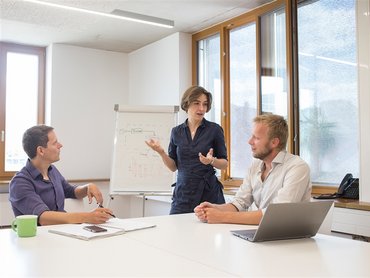
The world of professions: ifeu scientists model for BERUFENET
The BERUFENET editorial team was looking for support in describing the profession and creating a contemporary series of pictures of the engineer for environmental protection/environmental technology - and found it at ifeu in Heidelberg.
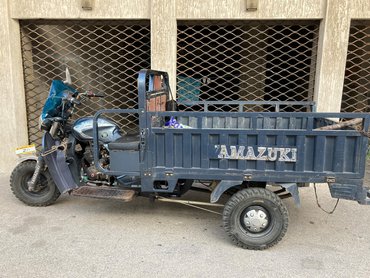
Data analysis of the Moroccan transport sector: the main results
For more than a year, a working group consisting of the ifeu Institute, the Moroccan Ministry of Transport and Logistics and NARSA has been conducting a study of the Moroccan transport sector on behalf of GIZ. This consists of collecting, processing and analysing relevant transport data. The analysis revealed, among other things, that emissions from the transport sector account for almost 30% of Morocco's total CO2 emissions. Almost half are caused by private cars (48.9 %), 35 % by trucks. At a workshop in Rabat organised by the Ministry of Transport and Logistics, previous findings were shared and analysed. These are now to be transformed into policy change measures.
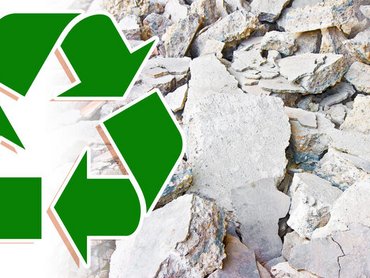
R-concrete as a building material alternative: funding programme for climate-friendly building construction
ifeu recently completed a research project that developed and tested approaches to optimising ready-mixed concrete as a building material. The project, carried out on behalf of the Baden-Württemberg Ministry of the Environment, showed that climate-friendly and resource-saving concrete (R-concrete) can be produced by recycling processed construction waste.
Greenhouse gas balance for health institutions - KliMeG calculator now online
In the NKI project Climate Protection in Hospitals by Optimising Supply Chains (KliOL), ifeu, in cooperation with the DBU-funded project Carbon Footprint in the Health Sector (CAFOGES), has created a harmonised greenhouse gas calculator for health institutions, which is now available free of charge.
How and to what extent can emissions be reduced by selected transport measures?
Traffic is one of the main sources of nitrogen oxides and soot particles in Germany. On behalf of the Federal Environment Agency, ifeu and AVISO have jointly determined which pollutant emissions can be expected in the future and which measures can reduce them and by how much.

ifeu-Podcast: Attention, upstream chain! Liquefied natural gas is more harmful to the climate than thought
In future, Germany wants to satisfy its gas hunger by importing natural gas from countries such as Qatar, Indonesia and the USA. In episode 9 of the ifeu podcast, physicist Daniel Münter explains why the supply of liquefied natural gas (LNG) and pipeline natural gas is already very damaging to the climate and what Germany and the EU can do to keep emissions as low as possible.